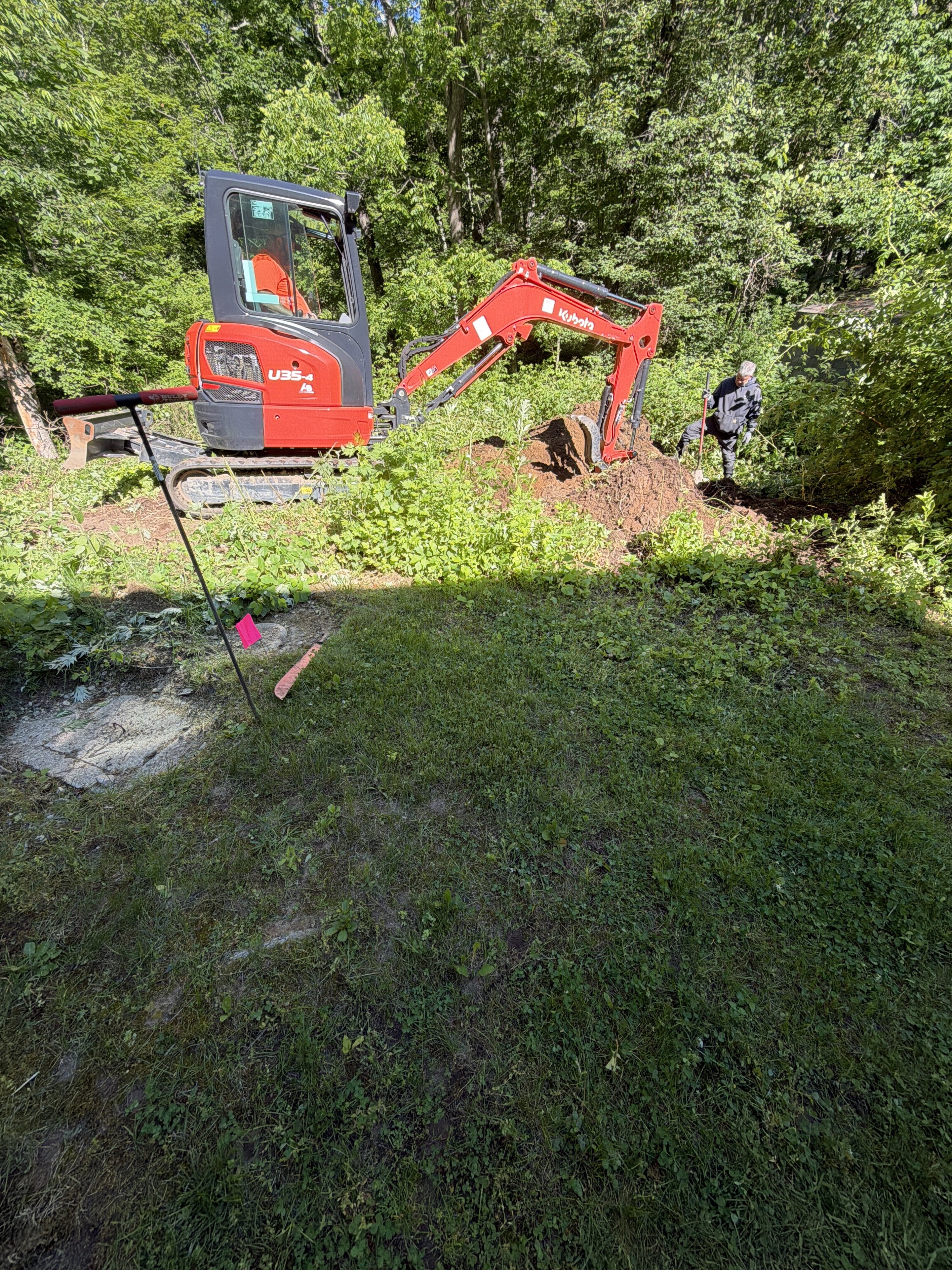
Four siblings inherited a house together.
None of them lived in it. None of them wanted to. They just wanted it sold, the estate closed, and the money split so everyone could move on.
Their realtor walked the property, ran the comps, and gave them a healthy list price — the kind of number that made the estate look like a clean, straightforward sale.
Then the septic inspection came back.
Failed. Not “needs minor repair.” Failed — as in, a full system replacement, tank and leach field, dug out of a wooded lot with an excavator. The kind of repair that runs $25,000 or more before anyone’s even talking about the house itself.
That one inspection result changed everything about what this house was actually worth to a family trying to sell it.
Why a Failed Septic Is Different From “The House Needs Work”
Most repair issues shrink your buyer pool. A failed septic system eliminates almost all of it.
Here’s why: nearly every conventional buyer needs a mortgage, and almost no lender will finance a home with a failed septic system or a failed perc test. Not “will make it harder.” Won’t do it. Full stop. The moment that inspection report comes back, your realtor’s buyer pool — the people who could actually close on your home — collapses to cash buyers and investors, whether that was the plan or not.
For a family in probate, that timing is brutal. You’re already carrying a house through a legal process that can take 6 to 18 months in Connecticut. Add a failed septic, and that “clean, straightforward” listing isn’t clean or straightforward anymore — it’s a listing that will sit, get relisted lower, and keep racking up carrying costs while the estate waits for a buyer who can pay cash for a problem most people don’t want.
That’s the situation these four siblings were actually in, even if their realtor’s number didn’t reflect it yet.
What Soil Testing and Septic Replacement Actually Cost in Connecticut
Before any of that repair math happens, Connecticut requires soil testing to confirm what a property’s ground can actually support. Here’s roughly what that looks like in real dollars:
- Soil testing / percolation (“perc”) test: Typically $750–$1,900, with most homeowners landing around $1,300. Connecticut’s process is more involved than a lot of states — it requires a deep test pit dug by a licensed installer (at least 6-8 feet down) plus percolation testing, witnessed and recorded by the local health department before any repair or replacement can be approved.
- Septic system replacement: In Connecticut, a standard system replacement typically runs $7,000–$15,000, but the full range is wide — $5,000 on the low end up to $30,000 or more for mound systems or engineered systems, which are often required when soil conditions won’t support a conventional drain field.
- Permits: Add another $500–$2,000 on top, depending on the town and the complexity of the system being approved.
Put together, a homeowner facing a full septic replacement in Connecticut is realistically looking at $8,000 on the low end and $30,000+ on the high end before the house itself is even back on solid footing — and that’s before accounting for the months it takes to test, permit, excavate, and pass final inspection.
(Costs above are general 2026 market ranges, not a quote for any specific property — actual pricing depends on soil type, system size, and your specific town’s health code requirements.)
Why Our Cash Offer Came in Well Below the Original List Price
We’re not going to pretend that gap doesn’t need an explanation, because it does.
The short version: a $25,000+ septic replacement, months of carrying costs while that work gets permitted and completed, and the fact that we’re the buyer who says yes when a bank says no — all of that gets priced into an as-is cash offer. We weren’t buying the house the realtor’s number described. We were buying the house that actually existed, with a failed septic system that most buyers legally couldn’t finance even if they wanted to.
For the siblings, the math wasn’t “the list price vs. our offer.” It was closer to “a fair cash number, in weeks, with nothing to fix and nothing to fight over” vs. “list it, watch it sit because financed buyers can’t touch it, spend money we don’t have on a system we don’t want to install, and wait.” We’ve walked other Connecticut heirs through that exact same math — the “real” cost of a listing isn’t the number on the sign, it’s that number minus everything it takes to actually get there.
We bought the property as-is. Septic, excavator hole, and all. No repairs required of them, no negotiating over who pays for what.
If You’ve Inherited a House With a Major Repair Problem
Septic failure is common enough in Connecticut that it’s worth knowing before an inspector tells you, not after:
- A large share of Connecticut’s housing stock is old — septic systems installed decades ago are reaching the end of their working life across the state, especially outside sewer-served towns.
- A failed inspection isn’t a negotiating chip — it’s a financing wall. Once it’s documented, you can’t un-know it, and most buyers can’t unsee it either.
- Multiple heirs make this harder, not easier. Four people can’t easily agree to split the cost of a $25,000 repair on a house none of them will live in. We’ve seen this dynamic before — sometimes selling as-is is the right call, sometimes it isn’t, and it’s worth actually working through which one you’re in.
- Probate makes the clock louder. Every month a property with a repair problem sits unsold is a month of taxes, insurance, and upkeep that comes straight out of what heirs eventually receive.
If you’re not sure whether probate even allows you to sell yet, we’ve broken that down in plain English here, and our full guide to selling an inherited house in Connecticut during probate covers the rest.
What We’d Tell You If You Called Us Today
If your septic system just failed inspection, or you’re inheriting a property and you’re worried it might, here’s the honest version: get the inspection done regardless of what you decide next. You can’t make a good decision on a problem you haven’t confirmed.
Then get a cash offer so you have a real number to weigh against the cost, the timeline, and the headache of a repair on a house you may not even want. It costs nothing to find out, and it gives you something concrete instead of a guess.
Call us at (203) 901-4198 or visit snapsalect.com.
We buy houses across Connecticut in any condition — failed septic, bad perc test, fire damage, decades of deferred maintenance. If it’s a problem, we’ve probably already bought a house with it.
SnapSale Homes is a local Connecticut cash home buyer. We are not attorneys, engineers, or septic contractors, and nothing in this article is legal, financial, or engineering advice. Septic and repair costs vary by property and municipality — get a licensed inspection before making any decisions. For guidance on your specific probate situation, consult a licensed Connecticut probate attorney. Details in this story have been changed to protect the sellers’ privacy.